Factory-direct steel gratings & stair treads, shipped worldwide
Stormwater Steel Grid
Handles storm water and truck wheels alike. Stormwater Grid built for real sites.
Factory-direct from Shijiazhuang — shipped worldwide FOB Tianjin · Itemized quote within 24 hours
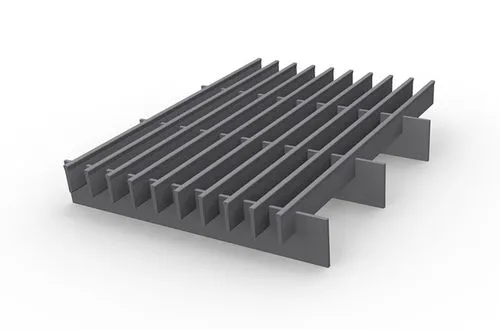
In-house weld & press lines
Grid panels formed under one roof
Certified & tested
Reports on request, MTC with every order
Samples in 5–7 days
Production in 15–25 working days
FOB Tianjin
Shipped worldwide, EXW / CIF negotiable
Load class reference
EN 124 Load Class Guide for Stormwater Grids
Class names below are referenced to EN 124, the public standard for gully tops and manhole covers. Use them to tell us the duty the grid will see — we then match bearing bar size, banding and opening to your class and your water volume, inside the 24-hour quote.
| Class (referenced to EN 124) | Typical stormwater position | Typical bearing bar | Typical bar spacing |
|---|---|---|---|
| A15 — pedestrian | Kerb inlets and pit grids on footpaths, clear of vehicle overrun | 20×3 to 30×3 mm | 30 mm centers |
| B125 — footway & light parking | Yard-edge trench runs, swale and channel covers | 30×3 to 40×4 mm | 30–40 mm centers |
| C250 — kerbside | Kerb-side inlet grids at road edges and parking bays | 40×4 to 50×5 mm | 40 mm centers |
| D400 — carriageway | Grids in the wheel path at crossings and carriageways | 50×5 to 100×8 mm, banded | 40–60 mm centers |
Classes are a reference vocabulary, not a certification claim — panels are produced to the class you specify, with test documents on request. Not sure which class your site needs? Send your layout — we will spec it inside the 24-hour quote.
Grid geometry
Capture vs Debris: The Opening Trade-off
Stormwater design is a honest trade-off: large openings pass more water, but they also let leaves and grit into the system. The grid, the pit below it and the cleaning regime should be chosen together.
1 · Large openings — maximum capture
Widely spaced bars admit storm flows fast, which is why kerb inlets and high-volume pits use large openings. The trade-off: leaves and grit pass through too, so the pit below must be deep enough to hold what enters and be reached by a cleaning crew.
2 · Standard mesh — the balanced grid
At 30–40 mm centers the grid still moves storm water freely, but most leaves and litter sit on top where a rake can lift them off in seconds. This is the default for yard trench runs and pit covers that maintenance staff visit regularly.
3 · The pit does the settling
Whatever passes the grid drops its grit in the pit, and cleaner water leaves through the outlet. Specifying grid and pit as one system — grid strength on top, settling depth below — is what keeps a stormwater installation working between cleans.
Why specify steel
Why Specifiers Choose a Stormwater Steel Grid
High-flow capture when it rains
An open steel grid admits the storm front fast — water drops through the grid instead of sheeting across the apron or flooding the kerb line. Opening geometry is chosen per position: wide at inlets, balanced along trench runs.
Built for truck wheels, not just rain
Thick bearing bars up to 100×8 mm and banded edges take wheel loads at kerbs, crossings and loading yards. Certified & tested, batch inspected — reports travel with the order.
Made to spec, any length — no middlemen
Panels cut and banded to your pit and trench drawings, in runs up to 6 m and any length layout you need. Factory-direct from our mill with a mill certificate on every order.
Applications
Where Stormwater Grids Work
From the kerb line to the detention pit, every stormwater position asks a different mix of flow, load and debris questions — the grid spec follows the position.
Kerb inlet grids
Road-edge capture during storms — large openings for fast intake, bar sizes matched to the traffic class at the kerb.
Stormwater pits & gullies
Removable grids sized to the pit opening, banded for lifting, with mesh fine enough to keep litter out of the chamber.
Yard & apron trench runs
Linear capture across paved yards and loading aprons — galvanized panels in continuous runs, wheeled where forklifts cross.
Detention & basin covers
Heavy grids over detention pits and swale crossings, specified with the settling depth below and access for cleaning.
Specifications
Stormwater Steel Grid Specifications
| Parameter | Range |
|---|---|
| Bearing bar | 20×3 mm to 100×8 mm, plain or serrated |
| Bar spacing | 30 / 40 / 60 mm centers |
| Panel width | Up to 1.25 m |
| Panel length | Up to 6 m, cut to your run layout |
| Materials | Q235B carbon steel · SS304 / SS316 stainless |
| Finish | Hot-dip galvanized (ASTM A123 / ISO 1461) as standard, or stainless mill finish |
| Edge treatment | Banded ends standard; frames and fixings quoted as companion items |
| Load reference | Produced to the EN 124 class you specify |
HDG default, stainless for chloride zones
Hot-dip galvanized Q235B is the default stormwater grid: ASTM A123 / ISO 1461 coating, with thickness checked by sampling on every galvanized batch. Switch to stainless where chlorides attack — SS316 for coastal roads and de-icing salt zones, SS304 for general washdown areas.
Materials & test documents
- Mill test certificate to EN 10204 Type 3.1
- Factory inspection report with every shipment
- Declaration of Conformity prepared per order destination
Standards & compliance
Produced to Recognized Standards — Documents on Request
EN 124 class reference
Classes referenced to EN 124 as a shared vocabulary — panels are produced to the class you specify, never presented as a certification claim.
ASTM A123 / ISO 1461 HDG
Galvanized coating thickness checked by sampling on every batch before panels are released — stage four of our five-stage QC plan.
CE & SGS tested
Certified & tested, reports on request — we show documents you can verify, not a certificate wall.
Custom made
Any Length, Any Pit — Cut and Banded to Your Drawings
Send your layout
Pit and trench widths, run lengths, load class and water volume — or just photos and a sketch. Drawing review is free.
Quote within 24 hours
Itemized, FOB Tianjin as standard — EXW or CIF on request. Small trial orders welcome for first-run inlet covers.
Samples in 5–7 days, production in 15–25
Working days after drawing confirmation, hot-dip galvanizing included. Installation drawings and fixing layout ship with the order.
Factory-direct quote
Get a Factory Quote
Send your stormwater grid layout for a factory quote — we reply within one business day, with an itemized quote and free drawing review.
- Five-stage QC, from MTC verification at goods-in to final inspection
- DoC, MTC EN 10204 3.1 and inspection report with every order
- Factory audits welcome — see the lines before you commit
Prefer to talk? WhatsApp us or sales@dtsteelladder.com
Request your quote
Five fields — we do the rest.
FAQ
Frequently Asked Questions
What is the lead time for stormwater steel grids?
Samples ship in 5–7 working days and mass production runs 15–25 working days after drawing confirmation, both including hot-dip galvanizing. Rush production in 10–15 days is possible with a surcharge — ask in your quote.
Should a stormwater grid be galvanized or stainless?
Hot-dip galvanized Q235B is the default for stormwater duty, coated to ASTM A123 / ISO 1461 with coating thickness checked by sampling on every batch. SS316 is the better choice in chloride zones such as coastal roads or areas with de-icing salt; SS304 suits general washdown areas. A mill test certificate accompanies either option.
Do you accept small trial orders of stormwater grids?
Yes — small trial orders are welcome, useful when you are proving one kerb inlet or pit cover before a full run. Full-container orders are calculated per loading plan, so you only pay for the steel you ship.
Related pages
Related Drainage Grating Pages
Steel Grid For Drainage
Drainage grid selection guide — matching the grid to the water path.
View page →Trench Grating
The linear trench grating line — continuous runs and spec table focus.
View page →Metal Gully Grid
Gully grid fundamentals — formats and class context for pit duty.
View page →Driveway Drain Grate
Driveway grates — wheel-load framing and heel-safe edges.
View page →Metal Catch Basin Drain
Catch basin framing — basin and grate specified as one system.
View page →Steel Trench Drain System
Channel body, grating, end caps and outlets as one spec.
View page →