Factory-direct steel gratings & stair treads, shipped worldwide
Electro-Forged Grating
Forged grating made on in-house lines. Flat, strong, on time.
Itemized quote within 24 hours · Free drawing review included
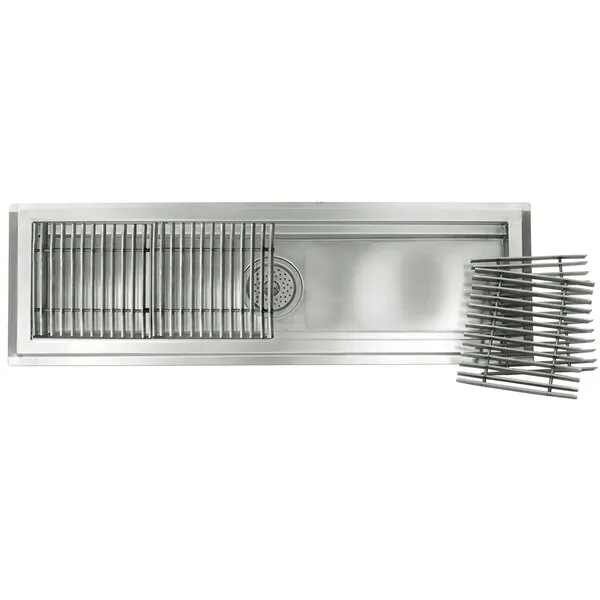
In-house forging lines
Electro-forged panels made under our own roof
Certified & tested
Reports on request, MTC with every order
Samples in 5–7 days
Production in 15–25 working days
FOB Tianjin
Shipped worldwide, EXW / CIF negotiable
Process comparison
Electro-Forged vs Press-Locked vs Swage-Locked
One buying decision, three forming routes. Fused joints behave differently from locked joints under load, vibration and weather — and the forming route decides the mesh range and flatness you can order. Here is the honest comparison, including which lines run in our own workshop.
| Dimension | Electro-Forged | Press-Locked | Swage-Locked |
|---|---|---|---|
| Forming principle | Electric current and hydraulic pressure forge every bearing-bar / cross-bar crossing into one piece | Cross bars mechanically pressed into notched bearing bars — no welding | Cross bars swaged through pre-punched bearing bars |
| Joint type | Fused — a forged bond at each intersection, not a clip or bolt | Mechanical interlock of notched bars | Mechanical deformation lock |
| Load behavior | High load capacity at wide spans; joints cannot work loose under vibration or wheel loads | Very uniform load distribution; suited to pedestrian traffic | High transverse stiffness; holds fine bars firmly |
| Mesh range | 30 / 40 / 60 mm centers | Down to 11 / 11 mm close mesh | Dense patterns; depends on bar selection |
| Panel flatness | Forged under pressure, so panels run flat without post-weld straightening | Extremely flat — no weld heat, no distortion | Flat; depends on bar tolerances |
| Typical use | Platforms, walkways, trench covers, guardrails | Municipal trench, tree pits, facades, fine floors | Architectural and fine-mesh flooring |
| Our lines | In-house — electro-forging line | In-house — press-lock machine | Assessed per project on our press line |
Not sure which process fits your loads? Send your drawings — we will spec it inside the 24-hour quote.
The physics of the joint
How Electro-Forging Works
No arc, no filler wire, no clips. A low-voltage current meets a hydraulic squeeze exactly where a cross bar sits on a bearing bar, and the two bars are forged together at the interface.
1 · Current meets pressure
At each intersection, resistance heating softens the interface while hydraulic pressure forges the bars together — a solid joint, not a bead of weld metal sitting on top of the bars.
2 · Every crossing, one pass
The whole grid is clamped and forged in a single pass — every intersection in the panel receives the same pressure and the same heat, so no joint is stronger than another.
3 · Galvanize, band, inspect
After forging, panels travel to a certified galvanizing partner near our mill for hot-dip galvanizing to ASTM A123 / ISO 1461 — usually 2–3 days, already inside your production window. Edges are banded, and joints are checked under our five-stage QC plan.
Terminology
Electro-Forged, Welded, Press-Welded — Which One Are You Buying?
Drawings and datasheets use the terms loosely. In plain language: "welded" tells you the joint is fused, "electro-forged" tells you how it was fused. When a drawing asks for electro forged grating — hyphenated or not — it is asking for exactly this resistance-forged construction.
"Welded" is the family name
A welded grating call-out means cross bars fused to bearing bars — and electro-forged panels answer that call-out. Our welded steel grating line and the welded grating overview cover the same construction from the product side.
"Electro-forged" is the method
Resistance current plus hydraulic pressure at every crossing, all in one pass. You will meet the same panel sold as forge-welded or press-welded grating — pressure-welding spellings of one physics.
What it is not
Press-locked and swage-locked panels hold their cross bars mechanically — no fusion at the interface. Both are honest choices; neither should be quoted as electro-forged.
Why specify forged
Why Buyers Specify Electro-Forged Grating
Fused joints — nothing to work loose
High-load duty means vibration, forklift wheels and years of traffic. A forged joint has no clip to drop and no bolt to retorque, which is why high-load floors default to forged panels.
Flat-top panels, straight off the line
Because pressure does the forming, flat-top forged grating needs no post-weld straightening — quieter floors underfoot, panels that sit level on their supports, faster installation.
In-house made, factory-direct
Forged grating from our own lines, custom sizes to your drawings, small trial orders welcome — with certified & tested documentation, reports on request.
Applications
Where Forged Panels Work Hardest
Open mesh that sheds water, ice and debris — with fused joints carrying the loads. These are the positions where the electro-forging process pays for itself.
High-load platforms
Maintenance decks and mezzanines where wheel loads cross the span and joints must not loosen.
Walkways & catwalks
Long elevated runs on flat panels — level walking surfaces with open mesh drainage.
Trench & drainage covers
Covers that take traffic from above and water from below — galvanized, with banded edges.
Stair treads & covers
Forged treads with serrated or plain surfaces, plus covers quoted from the same drawing.
Specifications
Electro-Forged Grating Specifications
| Parameter | Range |
|---|---|
| Forming | Electro-forged — every intersection resistance-forged under pressure, one pass |
| Bearing bar | 20×3 mm to 100×8 mm, plain or serrated |
| Bar spacing | 30 / 40 / 60 mm centers |
| Cross bar | Twisted square or round, per specification |
| Panel width | Up to 1.25 m |
| Panel length | Up to 6 m |
| Materials | Q235B carbon steel · SS304 / SS316 stainless |
| Surface | Black or hot-dip galvanized (ASTM A123 / ISO 1461) |
| Stock designation | 19W4 and custom equivalents |
Materials & test documents
Every heat of Q235B, SS304 or SS316 enters production with its mill test certificate verified at goods-in — the first of our five QC stages. Forged joints are inspected visually and by sampling before panels are released. What ships with your order:
- Mill test certificate to EN 10204 Type 3.1
- Factory inspection report with every shipment
- Declaration of Conformity prepared per order destination
Standards & compliance
Produced to Recognized Standards — Documents on Request
ANSI / NAAMM MBG 531
Forged panels produced to MBG 531 reference practice, with joint inspection built into our five-stage QC plan.
ASTM A123 / ISO 1461 HDG
Galvanizing to ASTM A123 and ISO 1461 reference practice, with coating thickness checked by sampling on every batch.
CE & SGS tested
Certified & tested, reports on request — test data ready for your file, not a certificate wall.
Custom made
Custom Sizes, Forged to Your Drawings
Send your drawing
Panel sizes, loads and quantities — or start from a photo and a sketch. Drawing review is free.
Quote within 24 hours
Itemized, FOB Tianjin as standard — EXW or CIF on request. Small trial orders welcome.
Forged grating samples in 5–7 days
Working days after drawing confirmation, hot-dip galvanizing included; production runs 15–25 working days. Fixing layout and installation drawings travel with the shipment.
Factory-direct quote
Get a Factory Quote
Get a factory quote in 24 hours — forged grating, treads and covers quoted from the same drawing, with free drawing review included.
- Five-stage QC, from MTC verification at goods-in to joint and final inspection
- DoC, MTC EN 10204 3.1 and inspection report with every order
- Factory audits welcome — see the forging lines before you commit
Prefer to talk? WhatsApp us or sales@dtsteelladder.com
Request your quote
Five fields — we do the rest.
FAQ
Frequently Asked Questions
Is electro-forged grating the same as welded grating?
Yes — the terms describe one construction. Electro-forged, forge-welded, press-welded and welded grating all mean bearing bars and cross bars fused at every intersection by resistance forging under pressure. Press-locked and swage-locked panels are different: their cross bars are locked mechanically, never fused.
What is the lead time for electro-forged grating?
Samples ship in 5–7 working days; production runs 15–25 working days after drawing confirmation, hot-dip galvanizing included. Rush runs in 10–15 days are possible with a surcharge — mention it in your quote.
Can I order small quantities or custom sizes?
Yes — small trial orders are welcome and every panel is cut and banded to your drawings. Quotes are itemized per m² or per ton, FOB Tianjin as standard, with EXW or CIF on request.
Related pages
Related Process Pages
Welded Steel Grating
The same fused construction, seen from the product side.
View page →Welded Grating
The full welded line — galvanized, serrated and custom panels.
View page →Press-Welded Grating
The pressure-welded spelling of the same forging physics.
View page →Press-Locked Grating
No-weld close mesh for trench covers and facades.
View page →Swage-Locked Grating
Cross bars swaged through punched bearing bars.
View page →Riveted Grating
The classic riveted alternative for heavy transverse loads.
View page →