Factory-direct steel gratings & stair treads, shipped worldwide
Grating HDG Specifications
Grating HDG: every batch ships with traceable mill test certificates.
Itemized quote within 24 hours · Free drawing review included
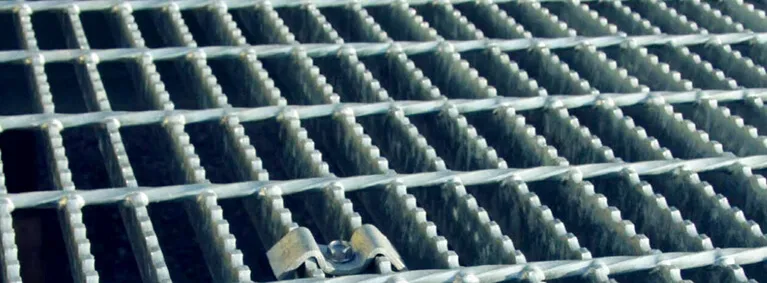
Galvanized after fabrication
2–3 day cycle at our certified partner, inside the production window
Certified & tested
Reports on request — MTC EN 10204 3.1 per heat
Samples in 5–7 days
Production in 15–25 working days, galvanizing included
FOB Tianjin
Shipped worldwide, EXW / CIF negotiable
Material comparison
Steel Grating Material Comparison
Before the zinc question comes the material question. Pick the environment first, then the corrosion demand, then the cost level — this table compresses that decision into three steps, with the hot-dip galvanized row highlighted as this page's material.
| Material | Corrosion protection | Typical environments | Relative cost level | Documents & checks |
|---|---|---|---|---|
| Hot-Dip Galvanized Q235B | Zinc bonded to the steel in the kettle; shields cut edges and scratches | Outdoor, municipal, wet industrial sites | Moderate | MTC per heat + coating data per ASTM A123 / ISO 1461 test reports on request |
| Black carbon steel (Q235B) | None as-supplied — needs coating on site or mill oil for transit | Indoor floors, or fabricator-finished work | Lowest | MTC per heat |
| SS304 stainless | Alloyed chromium oxide film through the full section | Food plant, chemical washdown, clean interiors | Higher | MTC per heat, grade traceable |
| SS316 stainless | Adds molybdenum for chloride-rich exposure | Marine, coastal, saline mist | Highest | MTC per heat, grade traceable |
Not sure which material fits your site? Send your drawings — we'll spec it inside the 24-hour quote.
Spec selection
Choosing HDG Expectations by Environment Class
"HDG" on a drawing says what the finish is — it does not say what the site will do to it. Specifiers set honest expectations by environment class, not by a fixed number of service years. The zinc consumes fastest where chlorides and process chemicals are thickest; frame your spec line accordingly.
| Environment class | What the zinc faces | Expectation for grating HDG | Spec watch-out |
|---|---|---|---|
| Rural / inland | Clean rain, drying cycles, low deposition | The easiest duty class — the longest stretch before the coating needs any attention | Still specify HDG, not paint — farm and rural traffic is abrasive |
| Urban | Pollution deposits, humidity, de-icing salt drift near roads | Solid everyday rust-resistant performance; routine inspection planning | Note walkways close to carriageways — road salt moves with splash and spray |
| Coastal / salt spray | Chloride deposition, airborne salt mist | Zinc works hardest here — expect earlier maintenance attention and design for inspection access | Constant splash or immersion zones point to SS316 instead; HDG suits atmospheric exposure |
| Industrial | Stack gases, process chemicals, washdown water, standing moisture | Depends on the actual chemistry on your plant — tell us what the site handles | Name the chemicals in your RFQ; washdown areas may fit stainless better |
Coating data, not coating promises
We do not quote service years. What we do provide is measurement: coating data per ASTM A123 / ISO 1461 test reports on request, sampled on every galvanized batch before release.
Environment first, material second
Rural, urban, coastal or industrial — the class sets the corrosion demand, and the demand sets whether galvanized Q235B, SS304 or SS316 carries it. Start the spec there and the material choice follows.
Where HDG is the wrong answer
Constant seawater splash, pickling fumes and some chemical washdowns eat zinc faster than any reasonable coating class can offset. Tell us the duty and we will say plainly if stainless fits better — no oversell.
Writing the spec line
How to Write an HDG Line into a Grating Spec
A vague "galvanized finish" clause invites the cheapest reading of it. Three elements make the line enforceable: the process, the standard, and the way compliance is proven.
A workable specification line
"Steel bar grating, welded or press-locked, Q235B, hot-dip galvanized after fabrication to ASTM A123 / ISO 1461; coating thickness verified by test reports on request; cut edges, drilled holes and site welds touched up with zinc-rich repair paint; mill test certificates supplied with the shipment."
Copy it, shorten it, or send us your own clause — we review the wording against your drawings free, inside the 24-hour quote.
Name the process and the standard
"Hot-dip galvanized after fabrication to ASTM A123 / ISO 1461" — the "after fabrication" words matter, because they put saw cuts, banding welds and drilled holes inside the kettle, not outside it.
Define how it is verified
State the paper you want to see: coating data per ASTM A123 / ISO 1461 test reports on request, sampled per batch, plus traceable mill test certificates for the base steel.
Define the touch-up protocol
Any steel exposed after delivery — field trims, fixing holes, site welds — gets zinc-rich repair paint. Writing it into the spec keeps one clause responsible for the whole panel, not just the factory surface.
On site
Inspection and Touch-Up Practice on Site
Grating HDG is specified long before anyone stands on it, but the coating is finished on site. Three habits keep the spec honest from delivery to handover.
Receiving inspection
Match the shipment to its documents — inspection report and traceable mill test certificates — then walk the panels for transit damage and uncoated spots. Coating data per ASTM A123 / ISO 1461 test reports is available on request before you release the order.
Handling and storage
Stack panels level on timber bearers so water runs off and air moves through the mesh. Bundles kept wet and unventilated can develop white wet-storage stain on the zinc — cosmetic, but avoidable with dry, drained stacking.
Touch-up discipline
Every fresh-cut edge, drilled fixing hole and site weld is bare steel. Coat those areas with zinc-rich repair paint as the work proceeds — the generic practice used across galvanized construction, applied per the paint maker's instructions.
Why specify grating HDG
Why Specifiers Write Grating HDG into Outdoor Projects
Rust-resistant, built to last
Zinc metallurgically bonded in the kettle, not sprayed on — it shields scratches and cut edges where paint fails first. The default finish for outdoor grating, from municipal walkways to plant platforms.
Custom HDG sizes from small MOQ
Panels are cut and banded to your drawings first, then dipped — so trims, notches and fixing holes come out of the kettle already zinc-covered. Small trial orders welcome.
Mill cert on every batch
Q235B heats are traceable through production, and grade options are open — stainless lines exist beside the galvanized line when the environment class calls for them.
Applications
Where Grating HDG Earns Its Zinc
Open mesh plus a zinc coat is the standard answer for anything that lives outdoors and gets walked on.
Outdoor walkways
Rain-shedding flooring for elevated and grade-level pedestrian routes.
Municipal trench covers
Kerb-line and carriageway drainage covers facing salt, splash and traffic.
Plant platforms & mezzanines
Maintenance access flooring that tolerates washdown and weather.
Galvanized stair treads
Outdoor escape and access stairs, serrated or plain, dipped after fabrication.
Specifications
Grating HDG Specification Sheet
| Parameter | Range / wording |
|---|---|
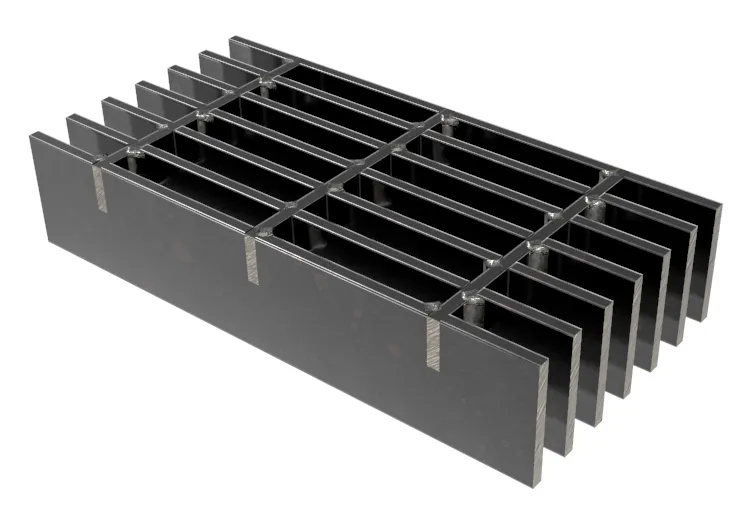
| Bearing bar | 20×3 mm to 100×8 mm, plain or serrated |
| Bar spacing | 30 / 40 / 60 mm centers |
| Base material | Q235B carbon steel; grade options on request |
| Finish | Hot-dip galvanized after fabrication, ASTM A123 / ISO 1461 |
| Coating verification | Thickness sampling per galvanized batch, test reports on request |
| Panel width / length | Up to 1.25 m / up to 6 m |
| Panel formats | Welded or press-locked; stair treads; trench covers |
| Documentation | Mill test certificates (EN 10204 Type 3.1) with every shipment |
Materials & test documents
Every Q235B heat enters production with its mill certificate verified at goods-in — the first of our five QC stages. Galvanized grating leaves with documentation you can check against the spec line:
- mill test certificates (EN 10204 Type 3.1) with every shipment
- Coating data per ASTM A123 / ISO 1461 test reports on request
- Factory inspection report with every shipment
- Declaration of Conformity prepared per order destination
Standards & compliance
The Standards an HDG Spec Line Leans On
ASTM A123 / ISO 1461
The coating standards your line references. Galvanized batches are coating-sampled to them before release — data per test reports on request.
ANSI / NAAMM MBG 531
The grating itself is produced to MBG 531 reference practice, with weld inspection on the five-stage QC plan.
CE & SGS tested
Certified & tested, reports on request — we show documents you can verify, not a certificate wall.
Custom made
Custom HDG Panels, Dipped After Fabrication
Send your drawing
Panel sizes, bar spacing, quantities — or just photos and a sketch. Drawing review and spec-line wording check are free.
Quote within 24 hours
Itemized, FOB Tianjin as standard — EXW or CIF on request. Small trial orders welcome.
Samples in 5–7 days, production in 15–25
Working days after drawing confirmation, with the 2–3 day galvanizing cycle already counted inside. Installation drawings and fixing layout ship with the order.
Factory-direct quote
Get a Factory Quote
Send your Grating HDG specs — environment class, panel sizes, quantities — and an itemized quote lands within 24 hours, free drawing review included.
- Five-stage QC, from MTC verification at goods-in to coating sampling at release
- DoC, MTC EN 10204 3.1 and inspection report with every order
- Material certs ready to preview before you commit
Prefer to talk? WhatsApp us or sales@dtsteelladder.com
Request your quote
Five fields — we do the rest.
FAQ
Frequently Asked Questions
Which environment class should grating HDG be specified for?
Hot-dip galvanized grating is the default for rural, urban and general industrial outdoor sites, and it is widely used in coastal work with salt-spray exposure. The zinc simply works hardest near the coast and around chemical attack, so those sites plan easier inspection access. Coating data per ASTM A123 / ISO 1461 test reports is available on request — we frame expectations by environment, not by fixed service years.
How do I write the HDG line into a grating specification?
Name the process and the standard, then say how it is verified. A workable line reads: steel bar grating, Q235B, hot-dip galvanized after fabrication to ASTM A123 / ISO 1461, coating thickness test reports on request, cut edges and site welds touched up with zinc-rich repair paint. We confirm the wording against your drawings inside the 24-hour quote.
What does the shipment include, and how is the coating checked?
Orders include mill test certificates (EN 10204 Type 3.1) with every shipment — traceable heat chemistry for the Q235B bars — plus a factory inspection report. Galvanized batches are coating-sampled before release, and any cut edges or drilled fixing holes are marked for zinc-rich repair paint touch-up on site.
Related pages
Related Galvanized Grating Pages
HDG Grating
The process story — what happens inside the kettle and why the bond holds.
View page →Hot-Dip Galvanized Grating
The standards and QC view — coating thickness sampling and the paper trail.
View page →Galv Grating
The galvanized line overview — HDG as the default weather protection.
View page →Grating Galvanized Steel
Q235B core plus zinc finish — material framing and batch coating checks.
View page →Galvanized Grid
Grid formats in galvanized steel for outdoor flooring and drainage.
View page →Black Grating
Uncoated mill finish — when you coat on site or specify HDG later.
View page →