Factory-direct steel gratings & stair treads, shipped worldwide
Road Safety Grating
Road safety grating teeth bite wet or oily soles. Fewer slips.
Itemized quote within 24 hours · Free drawing review included
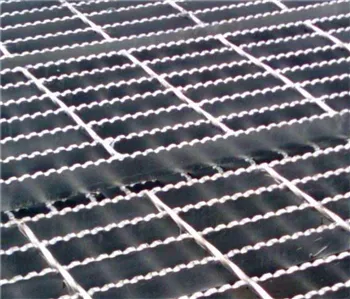
Factory-direct from the mill
Welding and press lines under one roof
Certified & tested
Reports on request, MTC with every order
Samples in 5–7 days
Production in 15–25 working days
FOB Tianjin
Shipped worldwide, EXW / CIF negotiable
Road position comparison
Where Grating Meets the Carriageway
Road safety grating is a position decision before it is a panel decision. The same welded geometry behaves differently at the kerb line, in the lane, and on the verge — so wheel exposure sets the bar class, the surface and the fixing.
| Dimension | Kerbside gully covers | Central & lane drainage covers | Verge & footway walkways |
|---|---|---|---|
| Traffic exposure | Splash zone — wheel overrun at the kerb edge | Full wheel passage and braking across the panel | Pedestrian and maintenance traffic only |
| Bar class direction | Mid to heavy classes, 30 / 40 mm centers | Heavy classes toward 100×8 mm bearing bars | Light classes from 20×3 mm, comfort spacing |
| Bar orientation | Bearing bars span the shortest opening side | Bearing bars span across the direction of travel | Span direction per the walkway framing |
| Surface | Serrated tops — wet soles at the kerb face | Serrated tops — wet, oily and salted surfaces | Serrated or plain; close mesh where heels cross |
| Fixing approach | Framed seat, bolt-down or locking fixings | Framed and bolted against rocking and rattling | Clipped or bolted at maintenance points |
| Corrosion exposure | De-icing salts and standing water | Spray, salts and channel moisture | Soil-side moisture at the verge |
Not sure which class your road position needs? Send your drawings — we will spec it inside the 24-hour quote, load tables provided on request.
How the geometry works
Wheel Loads, Tooth Tops and Bolt-Down Seats
1 · Wheel load goes to the bearing bars
The wheel lands on the bar tops; the bearing bars carry it to the frame seat at each side. Specifying the span direction and the bar class together is what keeps an in-lane cover quiet under a passing axle.
2 · Anti-slip as geometry, not claims
Serrated tooth tops present a serrated edge to wet or oily soles while the open mesh lets surface water fall away. It is surface geometry we can show you on a sample — not a slip-test rating we cannot.
3 · Seated, then bolted down
Banded edges sit square in the frame; bolt-down or locking fixings stop lift and rattle under traffic. Clips, bolts and frames are sourced companion items we supply to match the panels — never claimed as our own clip production line.
Why specify road-safe panels
Heavy Duty Under Wheels, Anti-Slip by Design
Heavy duty road safety grating
Wheel-rated construction the honest way: bar classes climb toward 100×8 mm and centers close to 30 mm where axles cross. One-piece welded joints cannot work loose under braking — load tables come with your quote.
Anti-slip road safety grating
Serrated or plain — your call per zone. In salted, rainy or oily lanes the serrated top is the default geometry; on verges where the public walks, close-mesh plain surfaces keep heels on the panel.
Road safety grating, any size
Gully schedules, lane runs, verge panels — every cover is cut and banded to your drawings from panels up to 1.25 m wide and 6 m long. Free drawing review is part of the 24-hour quote.
Applications
Road Safety Grating for Lanes, Kerbs and Verges
Open steel panels in and around the carriageway: they collect and shed water, survive wheel overrun, and stay where the road puts them.
Kerbside gully covers
Gratings over gully pots at the kerb line — serrated tops for wet soles, bolted seats against wheel overrun.
Central & lane drains
Median and central-drain covers inside the traffic path — heavy bar classes with bearing bars spanning across travel.
Verge & footway walkways
Pedestrian-side runs at crossings and service verges — heel-friendly spacing, lighter bar classes.
Lay-bys, yards & crossovers
Driveway crossovers, lay-by channels and yard gullies — the same road-duty logic at lower traffic speeds.
Specifications
Road Safety Grating Specifications
| Parameter | Range |
|---|---|
| Bearing bar | 20×3 mm to 100×8 mm, plain or serrated |
| Heavy road classes | Bar sizes toward 100×8 mm, centers at 30 / 40 mm |
| Bar spacing | 30 / 40 / 60 mm centers |
| Cross bar | Twisted square or round, per specification |
| Panel width | Up to 1.25 m |
| Panel length | Up to 6 m |
| Materials | Q235B carbon steel · SS304 / SS316 stainless |
| Surface | Black or hot-dip galvanized (ASTM A123 / ISO 1461) |
| Fixing options | Bolt-down, locking clips and frames — sourced companion items |
Materials & test documents
Road-side steel works in salt, spray and standing water, so documentation travels with the steel. Every heat of Q235B, SS304 or SS316 enters production with its mill test certificate verified at goods-in — the first of our five QC stages. Panels leave with:
- Mill test certificate to EN 10204 Type 3.1
- Factory inspection report with every shipment
- Declaration of Conformity prepared per order destination
Standards & compliance
Produced to the Class You Name — Documents on Request
EN 124 class context
Where your drawings name an EN 124 class such as C250 for gully gratings, panels are produced to the class you specify — class selection stays with your engineer. C250 explained →
ASTM A123 / ISO 1461 HDG
Galvanized coating thickness checked by sampling on every galvanized batch before panels are released — the baseline against road salts.
CE & SGS tested
Certified & tested, reports on request — material and batch documentation you can verify, not a certificate wall.
Custom made
Custom Covers, Cut and Banded to Your Road Drawings
Send your drawing
Gully schedule, lane runs, road position notes, quantities — or just photos and a sketch. Drawing review is free.
Quote within 24 hours
Itemized, FOB Tianjin as standard — EXW or CIF on request. Small trial orders welcome, no middlemen.
Samples in 5–7 days, production in 15–25
Working days after drawing confirmation, hot-dip galvanizing included. Installation drawings and a fixing layout ship with the order.
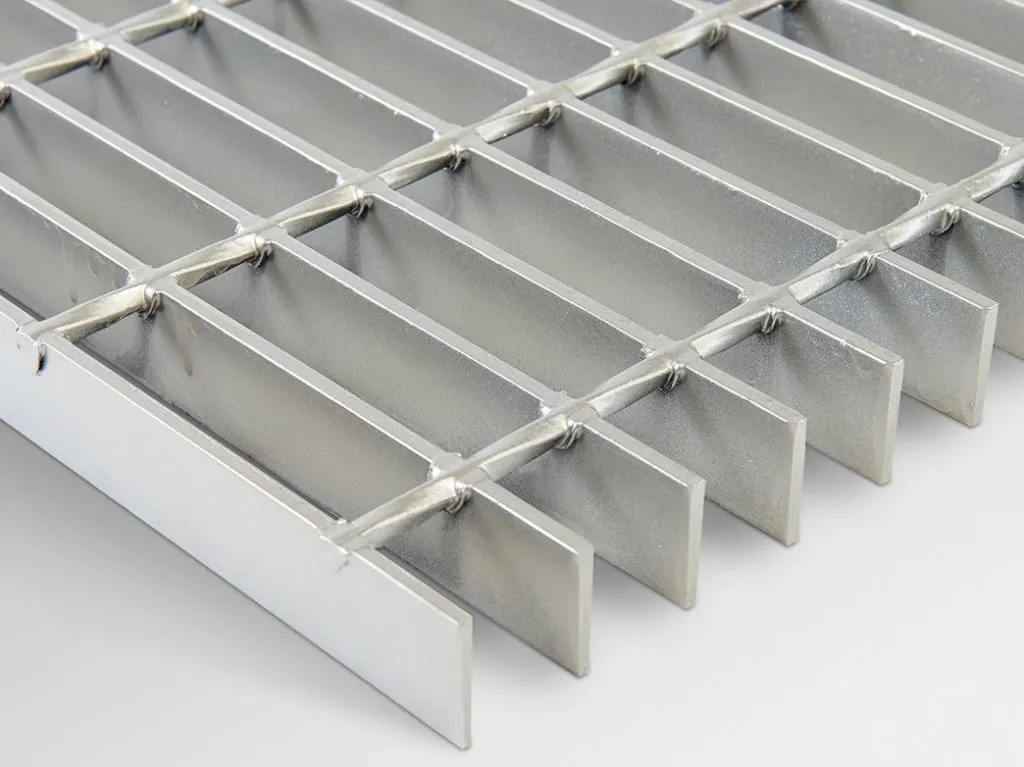
Factory-direct quote
Get a Factory Quote
Ask for your road safety grating quotes today — an itemized quote lands within 24 hours, free drawing review included.
- Five-stage QC, from MTC verification at goods-in to final inspection
- DoC, MTC EN 10204 3.1 and inspection report with every order
- Fixings and frames supplied to match — one order, one shipping plan
Prefer to talk? WhatsApp us or sales@dtsteelladder.com
Request your quote
Five fields — we do the rest.
FAQ
Frequently Asked Questions
Which bar class do road-side gully and lane covers need?
Position decides. Kerbside gully covers in the splash zone take mid-range bearing bars; covers sitting in a traffic lane need heavy classes toward 100×8 mm bearing bars with the bars spanning across the direction of travel. Verge walkways can stay lighter, down to 20×3 mm where only pedestrians pass. Send the road position and cover schedule — we confirm the class inside the 24-hour quote, with load tables provided on request.
Is road safety grating slip-tested?
No. Anti-slip on this page is surface geometry, not a tested rating: serrated tooth tops that bite into wet or oily soles, with open mesh that lets water drain away. We do not claim slip-test results. What arrives with every order is material documentation — a mill test certificate to EN 10204 Type 3.1, the factory inspection report and a Declaration of Conformity. Certified and tested, reports on request.
How do road covers stay in place under traffic?
By seating and fixing, not weight alone. Panels are banded for straight edges, set into frames at the kerb or channel, and held with bolt-down or locking fixings — sourced companion items we supply to match the panels, never claimed as our own clip production line. A fixing layout ships with the order, and where your drawing names an EN 124 class such as C250, panels are produced to that class.
Related pages
Related Road and Safety Grating Pages
Heavy-Duty Grating
What changes for wheel loads — bars, spans and centers.
View page →Driveway Drain Grate
Driveway crossovers — wheel-load framing at the kerb.
View page →Metal Gully Grid
Gully grid formats and class context, format by format.
View page →C250 Gully Grating
The EN 124 C250 class, in produce-to terms.
View page →Serrated Grating
Serration fundamentals — how the tooth works, in mechanics.
View page →Safety Grating
The safety line overview — surfaces and edges in one place.
View page →