Factory-direct steel gratings & stair treads, shipped worldwide
Metal Grid Stair
Grid stair with nosing and end plates, ready to install.
Itemized quote within 24 hours · Free drawing review included
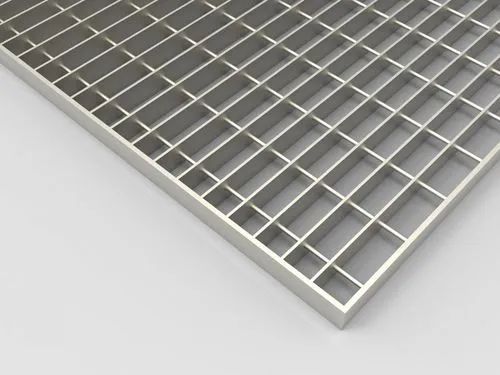
Tread dimensions
Metal Grid Stair Dimensions & Sizes
A metal grid stair uses the same bearing bars as a bar grating stair or platform panel — cut, banded and drilled into treads to the going, span and pitch of your flight. Width and length are custom sizes to drawings.
| Parameter | Range |
|---|---|
| Parent panel | Welded (electro-forged) or press-locked |
| Bearing bar | 20×3 mm to 100×8 mm, plain or serrated |
| Bar spacing | 30 / 40 / 60 mm centers · press-locked close mesh to 11 / 11 mm |
| Tread width & length | Custom sizes to drawings |
| End plates | Drilled to your bolt pattern, or plain for site welding |
| Nosing | Checker plate or angle, over serrated or plain tops |
| Materials | Q235B carbon steel · SS304 / SS316 stainless |
| Surface | Black or hot-dip galvanized (ASTM A123 / ISO 1461) |
Three Numbers Define a Grid Stair Tread
-
1
Width — the going
The tread surface from nosing back to the riser. Standard goings run around 250–300 mm; specify yours.
-
2
Length — the span
The distance between your stringers, carried by the bearing bars. Bearing bar size and spacing follow the span and load.
-
3
Pitch angle
The angle of the flight sets how the nosing overhang and end plates sit. Give the angle and we handle the geometry.
Tread tops compared
Serrated vs Plain Grid Stair Tops
Anti-slip behavior comes from geometry, not coating. Here is how the two tread-top choices differ — described as mechanics, with no slip-test claims.
| Dimension | Serrated Top | Plain Top |
|---|---|---|
| Surface geometry | Serrated teeth on the bearing bars | Flat bearing bars, mill edge |
| Grip mechanism | Tooth geometry bites into boot soles | Parallel bar edges underfoot, open mesh sheds water |
| Best suited to | Wet, oily, frost-prone and escape stairs | Dry indoor plant stairs |
| Combines with | Checker-plate or angle nosing | Checker-plate or angle nosing |
| Cost framing | Serration is a rolling step on the bar, not added material | The economical tread top |
| When quoting | State serrated bars | State plain bars |
Not sure which top suits your stairs? Send your drawings — we will spec it inside the 24-hour quote.
Installation
How Metal Grid Stairs Are Fitted
Treads arrive dimensioned, drilled and nosed — ready to bolt on or weld down. The parts that stop field problems are the ones we finish before shipping.
Bolted fixing
End plates arrive drilled to your bolt pattern and bolt straight to the stringer. A fixing layout ships with the order.
Welded fixing
Plain end plates can be site-welded to steel stringers when bolting is not wanted — no drilling on site.
Nosing & end plates
The leading-edge nosing marks the stair edge, while end plates carry the fixing — both fitted before shipping.
Custom drilling
Hole positions, slot shapes and bolt sizes are cut to your drawing, so each tread lands on the stair as drawn.
US specifiers reference OSHA 29 CFR 1910.24(c) for fixed industrial stairs. We produce treads to the loads and geometry you specify — installation drawings and a fixing layout ship with every order, and we do not certify your installation.
Custom made
Custom Metal Grid Stair Treads, Cut to Your Drawings
Cut to size
Treads are sawn and plasma-cut from parent panels to your width and length — odd sizes and angles are standard.
Banded edges
Open mesh is closed with a band around the perimeter — no snag points, stiffer tread, clean galvanizing line.
Nosing, end plates & holes
Checker-plate or angle nosing at the leading edge, end plates drilled to your bolt pattern — the tread ships ready to install.
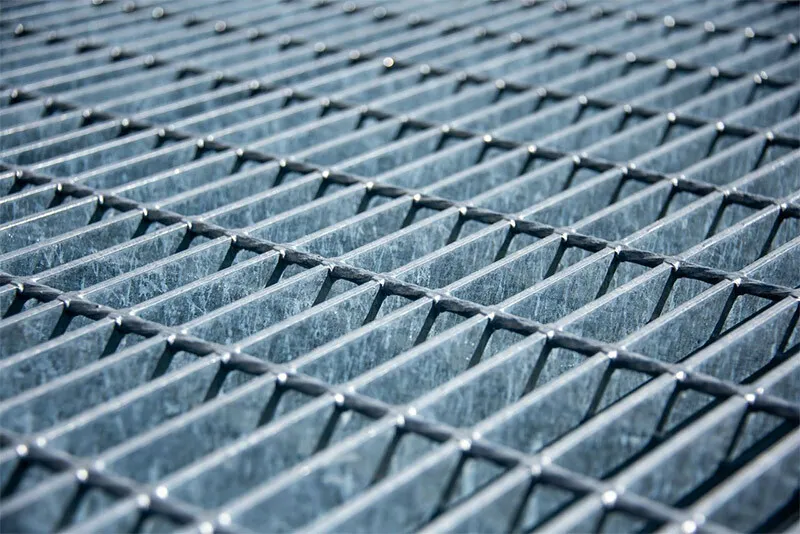
In-house weld & press lines
Electro-forging and press-locking under one roof
Certified & tested
Reports on request, MTC with every order
Samples in 5–7 days
Production in 15–25 working days
FOB Tianjin
Shipped worldwide, EXW / CIF negotiable
FAQ
Frequently Asked Questions
What is a metal grid stair?
A metal grid stair is a stair with open-mesh steel grating treads — serrated or plain bearing bars, banded edges and drilled end plates that bolt to the stringers. The open grid sheds water, ice and debris, which is why it is used on industrial and escape stairs.
Which tread top is safer — serrated or plain?
Serrated bearing bars carry tooth geometry that bites into boot soles, so we recommend them for wet, oily or outdoor stairs. Plain tops are the economical choice for dry indoor stairs and can still take a checker-plate nosing at the leading edge.
Can I order one flight or a full stair?
Either — treads are cut and drilled to your drawings from a single tread up to a full flight, with samples in 5–7 working days and production in 15–25 working days after drawing confirmation, hot-dip galvanizing included.
Factory-direct quote
Get a Factory Quote in 24 Hours
Get a factory quote in 24 hours — grid stair, treads & covers in one order. Send the going, span and pitch, and an itemized quote lands the next working day.
- Five-stage QC, from MTC verification at goods-in to final inspection
- DoC, MTC EN 10204 3.1 and inspection report with every order
- Factory audits welcome — see the lines before you commit
Prefer to talk? WhatsApp us or sales@dtsteelladder.com
Request your quote
Five fields — we do the rest.
Related pages
Related Stair Tread Pages
Bar Grating Stair Treads
Tread construction and nosing options, explained part by part.
View page →Grating Nosing
Nosing options compared — checker plate, angle and safety combinations.
View page →Grating Stair Treads Dimensions
The sizing guide — goings, spans and pitch angles explained.
View page →Stair Grating
The grating stair treads line overview — formats, finishes and buying path.
View page →Steel Grating Platform
Platform and walkway panels — usually ordered with the access stairs.
View page →Metal Drain Grating
Drainage grating for the areas around stairs and platforms.
View page →